Rethinking Templates

  • COMPANY: Frontify
  • PERIOD: March – September 2026
  • FOCUS: Systems Thinking, Information Architecture, Product Design

What started as page management became an opportunity to rethink how templates work.

The request was to extend page management: duplicate, reorder, delete, and copy pages across templates. But capability depended on the source and renderer. Figma-based static templates supported page flexibility; offering it to InDesign templates meant losing print capabilities. Adding disclaimers for each combination would have made an already complex product harder to understand. I proposed a different question: what is the template for?
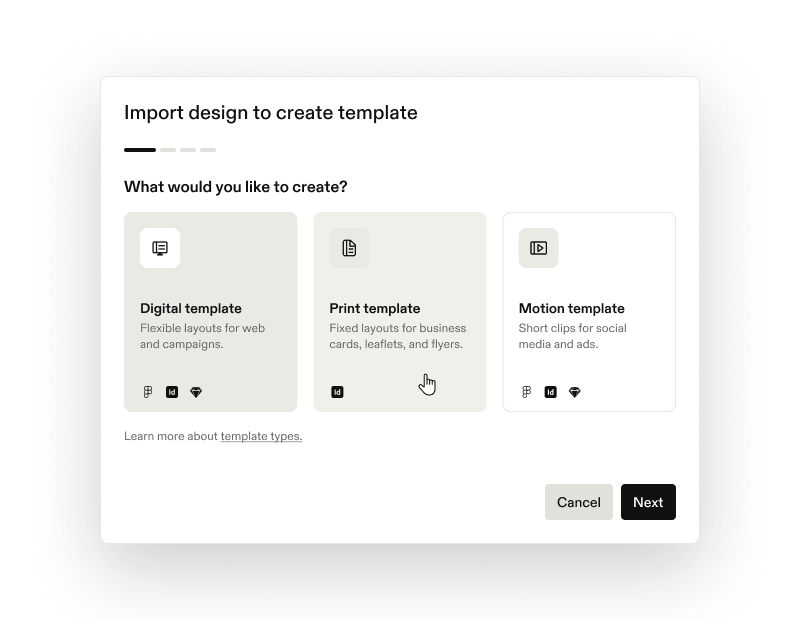
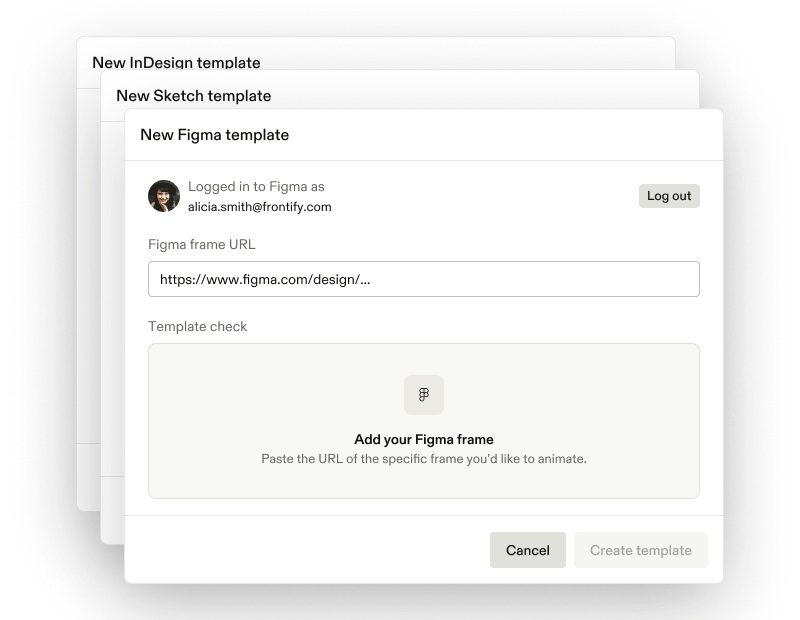
Earlier interface design
Revised interface design

Drag to compare the previous import interface with the proposed purpose-led direction.

The decisions

01

Find the real constraint

Page flexibility was framed as a file-format limitation. But users should not have to understand the rendering architecture to know what they can create.

02

Reframe around purpose

Around 80% of templates originated in InDesign, yet only about 25% were used for print workflows. I proposed Digital, Motion, and Print as distinct purposes, with conversion from Print to Digital when page flexibility matters more than print-specific capabilities.

03

Unify the entry point

Instead of choosing a source file from a dropdown, one import dialog starts with the intended output. Early testing with designers and marketers supported the new taxonomy and its familiar distinctions.

04

Design beyond one feature

A purpose-led model connects import, creation, conversion, feature discovery, and publication. Digital and Motion use the web renderer, opening paths to more capabilities. I’m now designing a reusable conversion dialog; converting to Print remains unsupported because it relies on the InDesign service.

Why it matters

Fewer warnings, clearer choices. Instead of asking users to trade features against source-file restrictions, the proposed model explains capabilities through the kind of content they want to make.

A structure that can scale. Each template type has a clearer place for future improvements and supported conversions. The taxonomy was validated in a small test, but broader adoption and impact are not yet measured.

What I took away

Sometimes the most useful interface change is changing the question underneath it.